Installing Microsoft Teams
Set up Microsoft Teams for Coralogix in three stages: a tenant admin adds the Coralogix app from the Microsoft Teams store, you set up and authorize the integration in Coralogix, then you create a connector for a channel.
Why set up Microsoft Teams
Connecting Microsoft Teams routes Coralogix alert and Case notifications into the channels your team already works in, so incidents surface where people are instead of in a separate tool. The native app also replaces the retired Office 365 incoming webhooks that older Teams notifications relied on, and it reflects the full Case lifecycle (assign, acknowledge, resolve, and close) in the channel in near real time. Set it up once (install, integrate, connect), and every router can send to Teams like any other destination.
Install the app in Teams
Coralogix publishes an app in the Microsoft Teams store. Adding and authorizing it requires a Microsoft 365 tenant admin. If you do not have admin permissions, ask your tenant admin to complete the setup.
- In Microsoft Teams, select Apps in the left sidebar to open the store.
- Search for Coralogix, select the app, then select Add. To make it available to a specific team, select Add to a team instead.
You can also open the listing directly at Coralogix in the Microsoft Teams store.
Adding the app to a team installs it for the public channels in that team. For a private channel, add the app to that channel as well. See How do I use a connector with a private channel?
Authorization happens next, in Coralogix.
Set up the integration in Coralogix
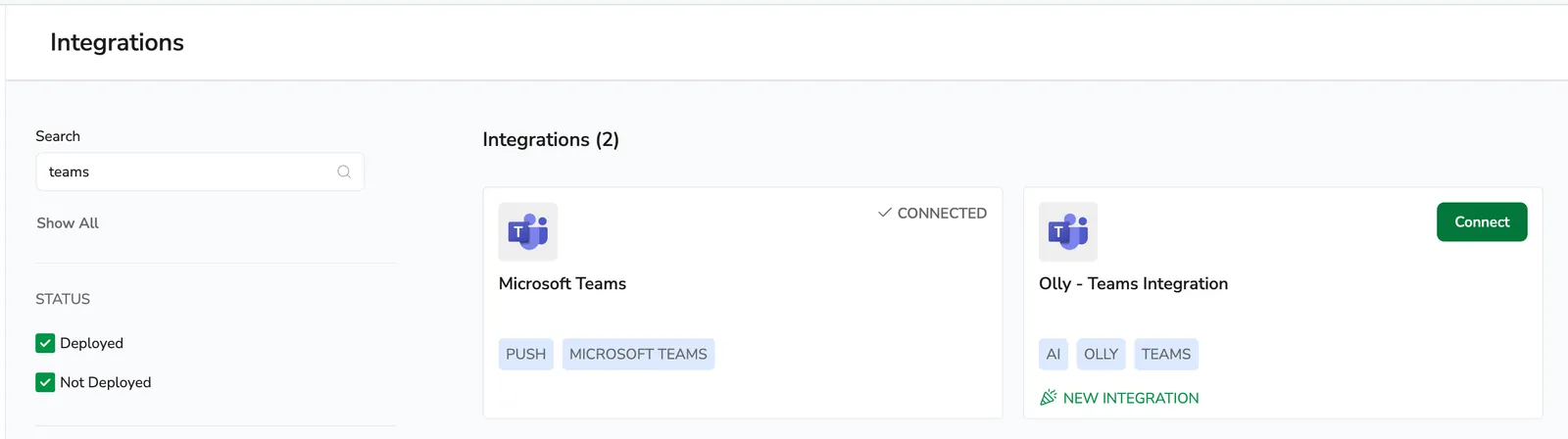
- Go to the Integrations page.
- Select Microsoft Teams (not Olly).
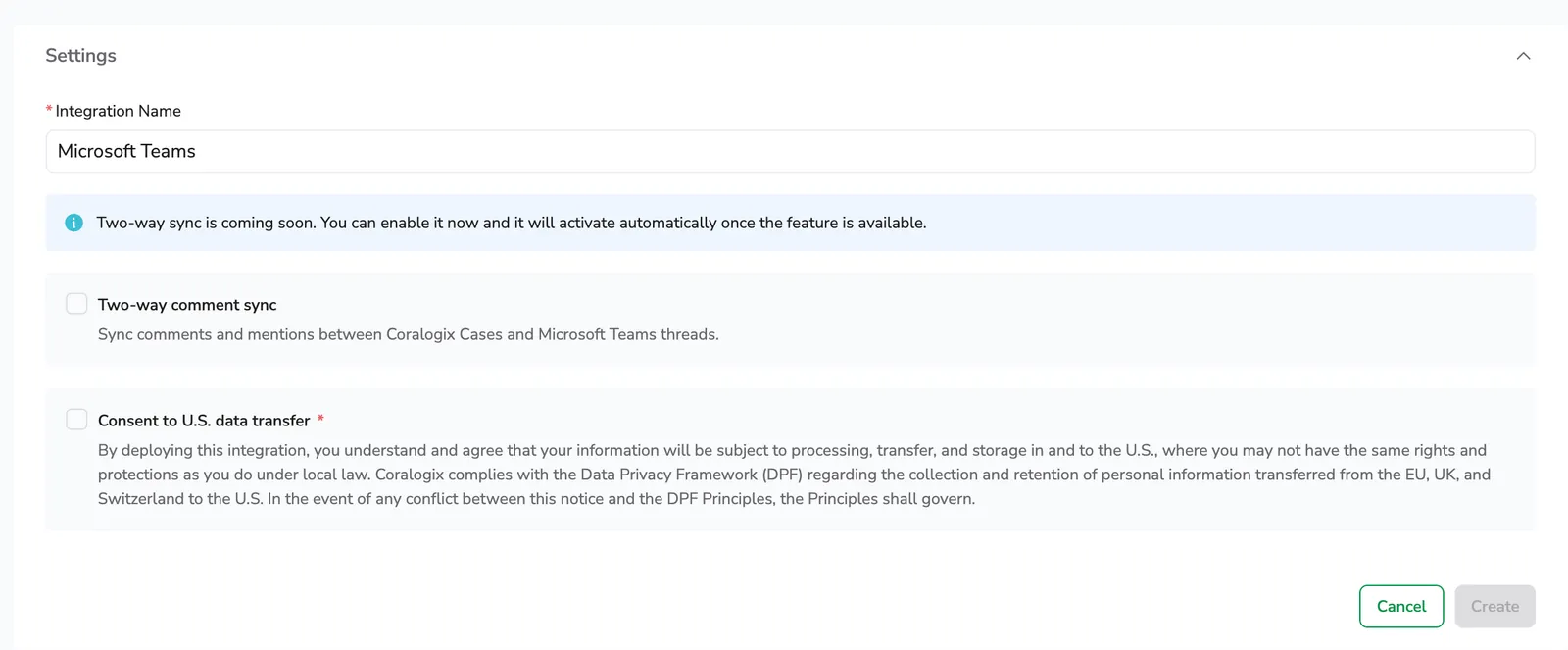
- Select Add New.
- Enter a name. If you want two-way sync, select it (it activates for this integration once that feature ships), and consent to US data transfer.
- Authorize the integration. This step requires a Microsoft 365 tenant admin:
- If you are a tenant admin: select Authorize, review the requested permissions, then select Accept.
- If you are not: send the authorization link to your Microsoft 365 tenant admin to approve.
- Create connectors here or from Notification Center.
Create a connector
A connector links to a single Microsoft Teams channel. The app must already be added to the team, and for a private channel you must add the app to that channel.
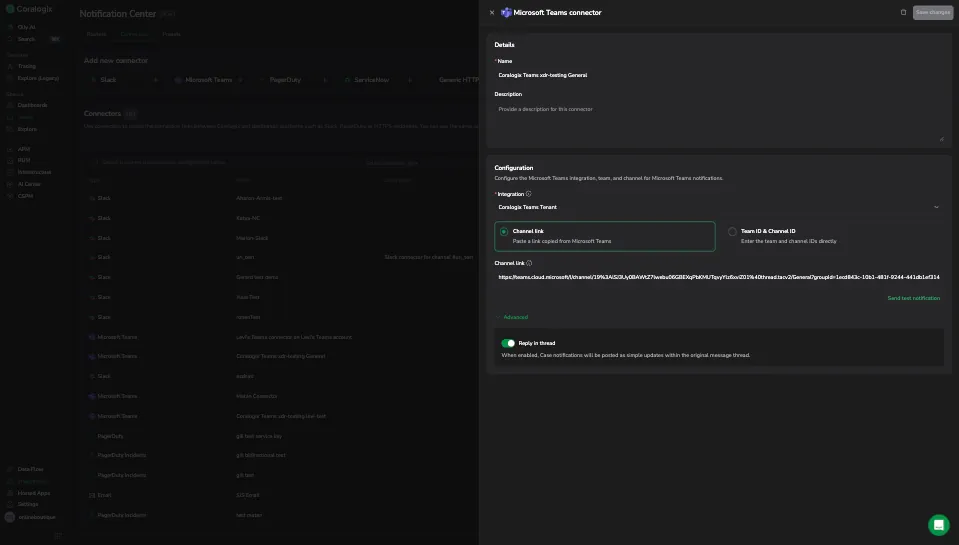
- Go to Notification Center, then Connectors, and select + Microsoft Teams.
- Select the integration. It is pre-filled if you have only one.
- Set the channel by pasting a channel link, or by entering the Team ID and Channel ID directly:
- To get the link, select the three-dots menu next to the channel name, then Copy link, and paste it into the field.
- To enter IDs manually, the Team ID is the
groupIdquery parameter in the link, and the Channel ID is the segment betweenchanneland the channel name.
- Select whether updates reply in the thread.
FAQ
How do I use a connector with a private channel?
The app can only post to a private channel it belongs to. Add it from the channel: open Manage channel, select Coralogix, then select Add. You can then use that channel's ID in a connector.
I installed the app from a ZIP file. How do I move to the store version?
Earlier installations used a ZIP package uploaded to your org's app catalog. Move to the store version so you receive future updates. A Microsoft 365 tenant admin removes the uploaded app, then installs the store one:
- Remove the uploaded app: search for Coralogix, select it, then select Actions, then Delete.
- Install the store app: in Apps, search for Coralogix, then select Add.
- Re-add the app to the required teams and channels.
You do not need to re-create the integration in Coralogix.